How Long To Keep Tax Records
Income Tax Records: How Long Should You Keep Them?
It’s more complicated than you might think. There are numerous factors involved.
Maybe you’re on one end or the other of the how-long-do-I-keep-my-income-tax-returns spectrum. You might keep them until you file the next year and then shred them. Or you might have boxes of old tax returns stored in a basement closet. Just in case, you might think.
What the IRS recommends is somewhere in the middle. And there’s not a simple, one-size-fits-all rule. According to the IRS, the length of time you should keep a document depends on the action, expense, or event that the document records.
What Does That Mean?
OK, let’s break that down a bit. As a general rule, you should hang on to your paper or digital files for three years from the date you filed your tax return or two years from the date the tax was paid, whichever is later. Why? Because that’s the IRS’s period of limitations, the time period during which the IRS can assess additional tax or you can amend a return to claim a refund or credit.
More Specifics
There are situations where you should keep income tax records indefinitely. Don’t dispose of them if:
You did not file a return, or,
You filed a fraudulent return.
The IRS says you should keep records for six years if you didn’t report income that you should have. This only applies if it represents more than 25% of the gross income displayed on your return.
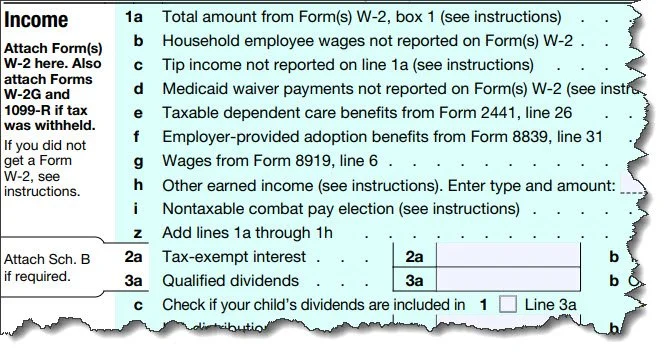
In some cases, you should keep tax returns for six years if you didn’t report income you should have.
If you claim a loss from bad debt deduction or worthless securities, keep your return and documentation for seven years.
The IRS can assess taxes up to six years after you filed your return.
Even when your period of limitations is up, you may still want to hang on to your old tax returns. Individuals or businesses beyond the IRS might want to see them, like insurance companies or creditors.
Refunds and Credits
Do you have a refund or credit coming that you haven’t claimed? The IRS suggests you file for this as soon as possible so you can get the process rolling. But you do have some time.
Refunds and credits can be claimed up to:
Two years after the date you paid the tax,
Three years after the date you submitted the original return, or,
Three years from the filing deadline (if you filed before the due date).
The IRS uses the latest of these dates as the deadline.
What About Expense Receipts and Other Documentation?
If you’re self-employed, you should be saving every expense receipt and any other documentation (bank and credit card statements, check duplicates, etc.) that backs up the totals you entered on your IRS Schedule C. These should fall into IRS categories like car and truck expenses, supplies, and deductible meals. You of course do not have to submit these paper and digital files with your tax return. But if you’re ever audited, the IRS will want to see proof that you spent the money you claimed was necessary to operate your business.
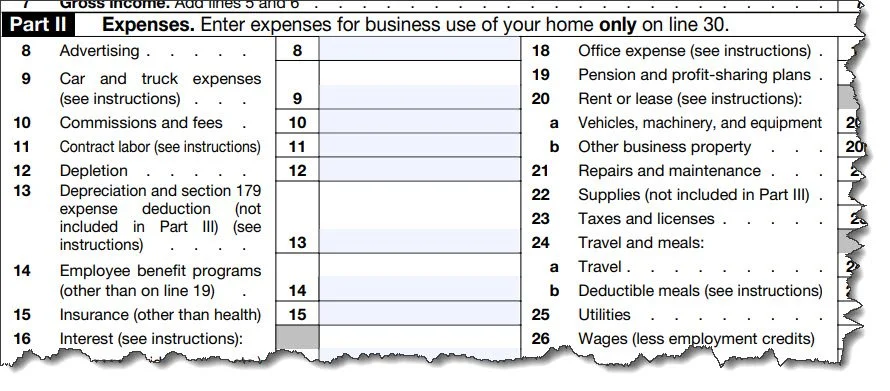
The receipts and other proof of payment documentation you save should fall into the Schedule C categories established by the IRS.
If you only have paper documentation, you can set up a series of physical folders or large envelopes to store them by month or by category. Digital files like scanned receipts should be carefully filed on your computer and on a backup storage device, like a USB drive. Organize these carefully and make sure they’re easily available for the same period of time that you’re required to keep your actual tax return.
Read more: For more information about how long to keep your records, visit our Record Retention webpage.
Total Business Care Can Help
Questions about anything income tax-related? Contact us!
For more information, please contact the Tax Team or email the office at info@totalbizcare.com to make an appointment.
To view more about the TBC Tax Team, please visit our Tax page or our Tax Care℠ page.